

The biotech industry in 2026 is unrecognisable. AI cuts drug costs, creates millions of jobs, and rewrites medicine. Here is what it means for you.
The Quinoa Effect: What Happens When the World Changes and You Don’t
In 1995, Kodak employed 140,000 people and owned 85% of the US camera market. Seven years later, it filed for bankruptcy. Not because photography died. Because the technology underneath it changed — and Kodak was too comfortable to move. The same fork in the road has arrived for the global biotech industry in 2026.
AI platforms are now designing drug candidates in 46 days — a process that took 4 to 5 years a decade ago. The biotech market is hitting $1.92 trillion in 2026. Over 5.4 million jobs now exist in the sector globally — up 17% year-on-year. This article argues that AI adoption in biotech is no longer optional — it is existential.
The State of Play: What Is Happening Right Now
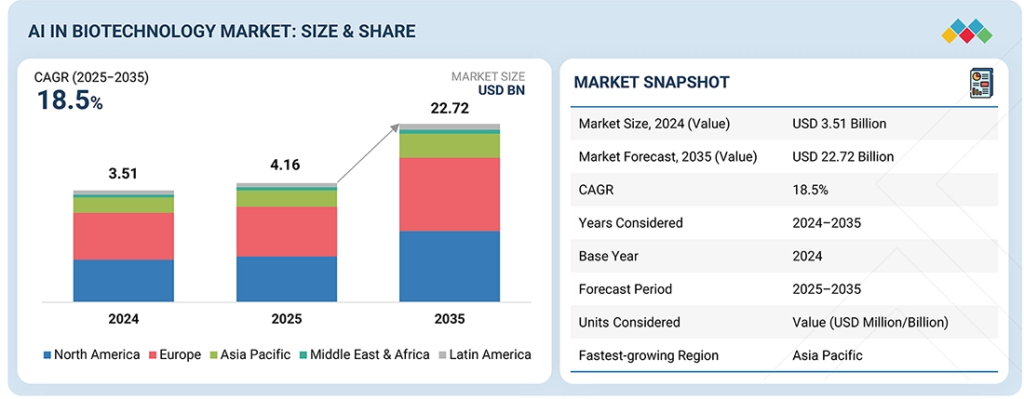
Three forces are colliding to reshape the entire industry.
First, AI is inside the lab. Recursion Pharmaceuticals, Insilico Medicine, and DeepMind’s Isomorphic Labs are using LLMs and generative AI to predict protein structures and simulate clinical outcomes before a single trial begins. The average cost of developing a new drug has dropped from $2.6 billion to $2.3 billion in 2026 — and is projected to fall below $1.7 billion by 2030.
Second, mRNA has gone mainstream. There are now over 120 active mRNA clinical programmes globally — covering cancer, HIV, rare genetic diseases, and personalised tumour vaccines. The mRNA market is projected to hit $281 billion by 2030.
Third, CRISPR is crossing from lab to clinic. By 2026, there are 17 CRISPR therapies in Phase II or III trials. The gene editing market is growing at 26.5% annually. We are witnessing, in real time, the end of “incurable.”
Biotech Industry 2026: Key Global Metrics
| Metric | 2024 Actual | 2026 Est. | 2030 Proj. | YoY Growth |
|---|---|---|---|---|
| Global Biotech Market | $1.45 T | $1.92 T | $3.88 T | +14.2% |
| AI in Drug Discovery Mkt | $1.8 B | $4.1 B | $19.2 B | +51.3% |
| Biotech Jobs (Global) | 4.6 M | 5.4 M | 8.1 M | +17.4% |
| mRNA Therapeutics Mkt | $62 B | $97 B | $281 B | +24.8% |
| CRISPR/Gene Editing Mkt | $7.7 B | $12.3 B | $38.9 B | +26.5% |
| Biosimilars Mkt | $31 B | $48 B | $110 B | +22.1% |
| Avg R&D Cost/Drug | $2.6 B | $2.3 B | $1.7 B | -5.8% (AI-led) |
Why AI Is Not Replacing Biologists — It Is Replacing Slow Biologists
“AI does not care about your PhD. It cares about your output. The most productive teams are where scientists and AI work together.”
Insilico Medicine’s drug INS018_055 went from concept to Phase II in under 30 months. The industry average is 97 months. AI-enabled biotech companies are raising capital 2.4x faster than non-AI peers. Sequoia, a16z, and SoftBank have all made AI-biotech their highest-conviction sector for 2025–2028.
Jobs: The Sector That Is Hiring While Everyone Else Is Cutting
The fastest-growing roles, all hybrid:
- Bioinformaticians with ML skills — $145K–$210K/yr | Demand up 73% YoY
- AI-Biotech Product Managers — $130K–$185K/yr | Demand up 58% YoY
- Computational Chemists — $120K–$175K/yr | Demand up 44% YoY
- Clinical Data Scientists — $110K–$160K/yr | Demand up 39% YoY
- Regulatory Affairs (AI Products) — $95K–$145K/yr | Demand up 51% YoY
The Counterargument — And Why It Falls Short
Critics raise two fair concerns: safety (AI candidates show higher off-target effects at current model maturity) and equity (Casgevy costs $2.2M per patient). Both are real. Neither defeats the thesis. The FDA’s 2026 AI Drug Review Framework addresses the first. Biosimilars growing at 22% annually address the second. The answer to inequitable access is not slower innovation — it is smarter policy.
Five Actions That Will Define Who Wins This Decade
- Invest in AI-Biology Talent Pipelines Now — fund interdisciplinary programmes that train scientists to be computationally fluent
- Build Regulatory Frameworks That Match Innovation Speed — harmonise FDA, EMA, CDSCO, and NMPA AI standards globally
- Force Open Data Standards for Drug Discovery AI — a global biomedical data commons would accelerate every platform in the ecosystem
- Price Access Into the Business Model From Day One — tiered pricing and outcomes-based reimbursement, as standard not charity
- Back Synthetic Biology as a Strategic National Priority — the bio-manufacturing economy will rival semiconductors by 2035
📊 What This Means for You
💼 Investors: Watch AI-biotech convergence plays — Recursion, Insilico, XtalPi. mRNA and gene editing funds are outperforming traditional pharma ETFs by 3.2x.
🔬 Scientists: Upskill in computational biology now. AI-bio hybrids command salaries 40% above traditional bench scientists.
🏥 Patients: By 2028, your doctor may prescribe a therapy designed for your specific genetic profile. The one-drug-fits-all era is ending.
“Biotechnology is no longer just a science. It is the world’s most important technology platform. The only question is who builds on it first.”